
Ballots That Don’t Count: Why African Elections Go Wrong
Author: TN
Date: January 30, 2026
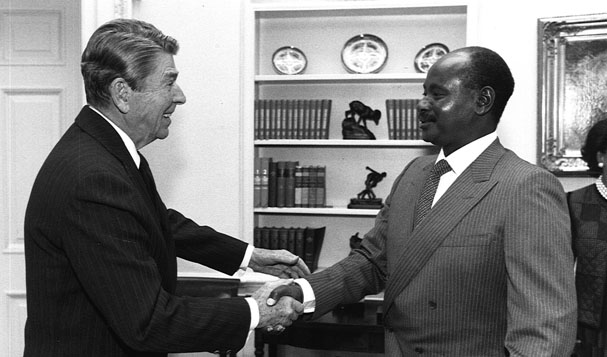
Election seasons in Africa are often bad omens. Tensions rise, communities fracture, protesters fill the streets, and in the worst cases, people die. Instead of serving as moments of political accountability, elections frequently legitimize entrenched power or provoke violent repression. This pattern is not accidental. Across the continent, elections fail because they are embedded in political systems shaped by colonial legacies, sustained by foreign patronage, and dominated by leaders who cannot afford to lose power, with violence and impunity enforcing the status quo.
Inherited Power and Entrenched Rule
Uganda offers a clear window into how elections are hollowed out long before voters ever reach the ballot box. Since independence from Britain in 1962, the country has struggled with political instability rooted in colonial governance structures. British authorities ruled through indirect control, empowering select local elites, particularly within the Buganda kingdom while sidelining others. This approach deepened ethnic divisions and concentrated power without building institutions capable of accountability.
After independence, these weak foundations allowed power to concentrate in the hands of a few rather than move through democratic institutions. President Yoweri Museveni, who has been in power since 1986, oversaw the removal of presidential term limits in 2005, enabling him to run for office indefinitely. Although Uganda is rich in oil, gold, and cash crops like coffee, it remains heavily dependent on Western aid. Museveni has carefully positioned the country as a regional security partner, contributing troops to missions such as the fight against al-Shabab in Somalia, a role that has helped his government secure continued external support even as political freedoms at home have steadily shrunk. Elections still take place, but they rarely pose a real challenge to the president’s grip on power.
Colonial Legacies
The roots of this electoral dysfunction stretch far beyond Uganda. Across Africa, colonial administrations built states designed to extract resources and maintain control, not to represent citizens. Borders were drawn with little regard for existing communities, often forcing rival groups into the same political space or splitting cohesive societies apart. Power was exercised through favored intermediaries whose authority came from their closeness to the state, not from public support. Accountability ran upward to colonial capitals, not downward to the people being governed. At independence, many African leaders inherited highly centralized and coercive state structures with few meaningful checks on executive power. Elections were introduced into systems that had never been designed to restrain those at the top. In countries such as Nigeria, Kenya, and Sudan, post-colonial governments largely preserved these frameworks, reproducing patterns of ethnic favoritism, exclusion, and repression When elections occur within unreformed colonial states, they become symbolic exercises, rituals that affirm authority rather than mechanisms that distribute it.
Foreign Patronage
If colonial legacies laid the foundation, foreign patronage has helped keep these systems in place. External powers often place a higher value on stability, security partnerships, and economic access than on democratic standards. Aid, military training, and diplomatic support tend to flow to governments that present themselves as dependable allies, even when elections fall short of basic credibility. Uganda fits this pattern closely. By portraying itself as a stabilizing force in the Great Lakes region and a key partner in counterterrorism efforts, the Museveni government has largely shielded itself from sustained international pressure. This dynamic is far from unique. Across the continent, deeply flawed elections are typically met with cautious criticism, carefully worded statements, and business as usual. When international approval carries more weight than domestic consent, elections begin to lose their purpose. Leaders no longer need to earn the trust of their citizens, only the continued backing of foreign partners.
The Politics of Staying in Power
This environment helps explain why so many African leaders are unwilling to leave office. The problem is not simply personal ambition, but fragile institutions. In political systems where courts lack independence, security forces answer to the executive, and transitions are poorly regulated, losing power can feel existential. Former leaders often face the prospect of prosecution, exile, or worse once they leave office. Uganda’s removal of presidential term limits reflects a broader pattern across the continent. In Cameroon, President Paul Biya, now 92, was re-elected in 2025, meaning that if he survives the term, his presidency will outlive most Cameroonians’ working lives. The country’s institutions have shown little capacity to manage succession or enforce constitutional limits, leaving it mired in political paralysis. In such systems, elections become moments of risk for incumbents not because they might lose, but because the consequences of losing are so severe. Faced with those stakes, leaders rewrite constitutions, suppress opposition, and strip electoral processes of any real meaning to remain in power.
When Elections Become Confrontation
In political systems where elections cannot produce real change, they instead concentrate long-simmering grievances. When outcomes appear predetermined, citizens see formal participation as futile and turn to protest. State responses to these moments often escalate tensions rather than calm them. Violence is not unchecked, but accountability is uneven and selective. Protesters, opposition supporters, and ordinary citizens are often punished quickly and harshly, while those responsible for abuses carried out in the name of “restoring order” face little scrutiny. Governments maintain tight control over prosecutors, restrict media coverage, and limit access to information through measures such as internet shutdowns. In Tanzania, despite credible reports of widespread abuses after the election, meaningful accountability has yet to follow, a pattern seen across much of the continent. The result is a deeply skewed system of justice. In such conditions, elections no longer resolve political conflict; they expose and intensify it.
The Absence of Accountability
International and regional accountability mechanisms have also fallen short. Observer missions routinely document irregularities, issue statements of concern, and then move on. The African Union’s findings in Tanzania echoed similar reports from across the continent, yet enforcement remains weak. Courts often lack independence, sanctions are rare, and diplomatic relationships tend to continue unchanged. Condemnation without real consequences slowly normalizes repression. Over time, electoral violence stops being exceptional and becomes expected, even tolerated, as part of the political cycle. Elections no longer represent moments of democratic possibility but predictable episodes of unrest.
Summing Up the Crisis
African elections are not failing because Africans reject democracy. They are failing because elections are being asked to do what institutions, incentives, and power structures actively prevent them from doing. Colonial legacies produced states designed for control rather than representation, foreign patronage continues to reward stability over accountability, leaders manipulate institutions to remain in power, and violence fills the void when citizens resist. Fixing African elections therefore requires more than better ballots or more observers. It demands institutional reform, genuine accountability, and political systems in which losing power is survivable. Until then, elections will continue to promise democracy while delivering anything but.
Where Hope Lies
Meaningful reform must begin at the institutional level. Many African states still operate within governance frameworks inherited from colonial administrations that were never intended to be accountable to the public. Addressing this reality requires more than technical fixes; it requires confronting the narratives and assumptions embedded in state structures themselves. Electoral systems, constitutional arrangements, and executive authority must be rethought in ways that reflect local political cultures, historical experiences, and social realities.
Rather than replicating Western democratic models wholesale, African states must develop governance systems that are functional, legitimate, and rooted in their own contexts. Kenya’s post-2010 constitutional reforms, which strengthened judicial independence and expanded protections for free expression, offer one example of how institutional redesign can begin to shift the balance toward accountability, even if the process remains incomplete.
The African Union has a central role to play in this process. As the continent’s primary political body, it must move beyond observation and rhetoric toward enforcement. This requires working with member states to strengthen institutional capacity while also coordinating with global powers to ensure that democratic norms are not selectively applied. Observer reports should trigger consequences, not simply documentation. Sanctions, diplomatic pressure, and conditional cooperation must be used consistently when governments undermine electoral integrity or repress dissent. Without credible enforcement, regional norms lose their force.
At the same time, the African Union must act as an intermediary between African states and external actors. Global powers that provide aid, security assistance, or investment must be held to the same standard of accountability they claim to support. Stability built on repression is not stability at all, and regional bodies are uniquely positioned to make that case collectively. If elections are to regain their meaning, accountability must be enforced not only domestically, but regionally and internationally.
Yet for any of these solutions to move the needle, a central question remains. What happens when domestic elites and global powers that benefit from existing broken systems refuse reform? Under those conditions, how can meaningful change be negotiated?
 Amherst Political Review

Leave a comment